

Hey, vendors: Somewhere between the last time you updated your website and right now, a decent chunk of your future couples started their vendor search in a completely different room. According to a May 2026 research brief from Bain & Company, 44% of online buyers in the US now begin their purchase journey inside an AI platform, or they’re splitting time between AI tools and a regular search engine. Millennials are leading the charge (52% start with an AI assistant), but Gen Z isn’t far behind at 25%, compared to just 30% who start with AI-enabled Google.
As a vendor, you didn’t opt into this massive discoverability shift. Neither did your couples, really… It just happened, the way most consumer behavior changes happen: gradually, at scale, and mostly invisible until someone hands you the stats.
The search bar isn’t the front door anymore
Here’s the part that may change how you think about your marketing: 60% of searches now end without anyone clicking through to a website at all. The AI just answers the question. Your website’s beautifully written About page, your carefully chosen portfolio images, the blog post you agonized over in 2024: none of it matters if the AI never sends anyone there to look.
But hold on: this isn’t necessarily a reason to panic! It’s just a reason to understand where the AI is pulling its answers from, because it’s very much not just your homepage.
Backlinks are dead! Long live the mention
For years, the goal of getting your work featured online was straightforward: if you got featured by a wedding blog, it meant more eyeballs, more referral clicks, and a small SEO bump from the backlink. A version of that game still exists, technically…. but it’s no longer the main event.
An analysis of roughly 500 million AI citations found that 89% of unbranded prompts (the ones that don’t name a specific brand or vendor) get answered using third-party sources (not the business’s own website). Lemme translate that into offbeat wedding industry terms: when a couple asks ChatGPT or Gemini who does inclusive elopements in the Pacific Northwest, the bots aren’t reading your homepage… they synthesize an answer from stuff like your Google local listing, wedding vendor directories, real wedding features, other vendors’ blog posts, and other places where your business name has shown up in someone else’s content.
Getting mentioned on a website that couples and AI models both already trust used to just be about traffic, but these days it’s also doing something else: training the AI models to associate your name with your specialty. This is a different kind of marketing currency, and it’s one your own website cannot generate by itself (no matter how great your copy is!).
Is your business bio answering questions nobody’s asking?
Old SEO logic trained everyone to write bios like keyword strings: “Pacific Northwest wedding photographer, PNW elopement photographer, Seattle elopement photographer.”
Here’s the reality this year: AI search doesn’t work off keyword density. It works off actual questions, broken into pieces and searched independently. So the bio that wins isn’t the one stuffed with location-and-service combos, but rather the one that reads like an answer to the sentence a couple would genuinely type into a chatbot: something closer to “who photographs queer elopements without making anyone perform for the camera?”
(This is a big part of why Offbeat Wed directory listings now include two extensive Q&A sections for vendors to fill out: one about business FAQ, and one about more personal interview questions so readers and bots can get to know you better. You can see a couple great examples here and here.)
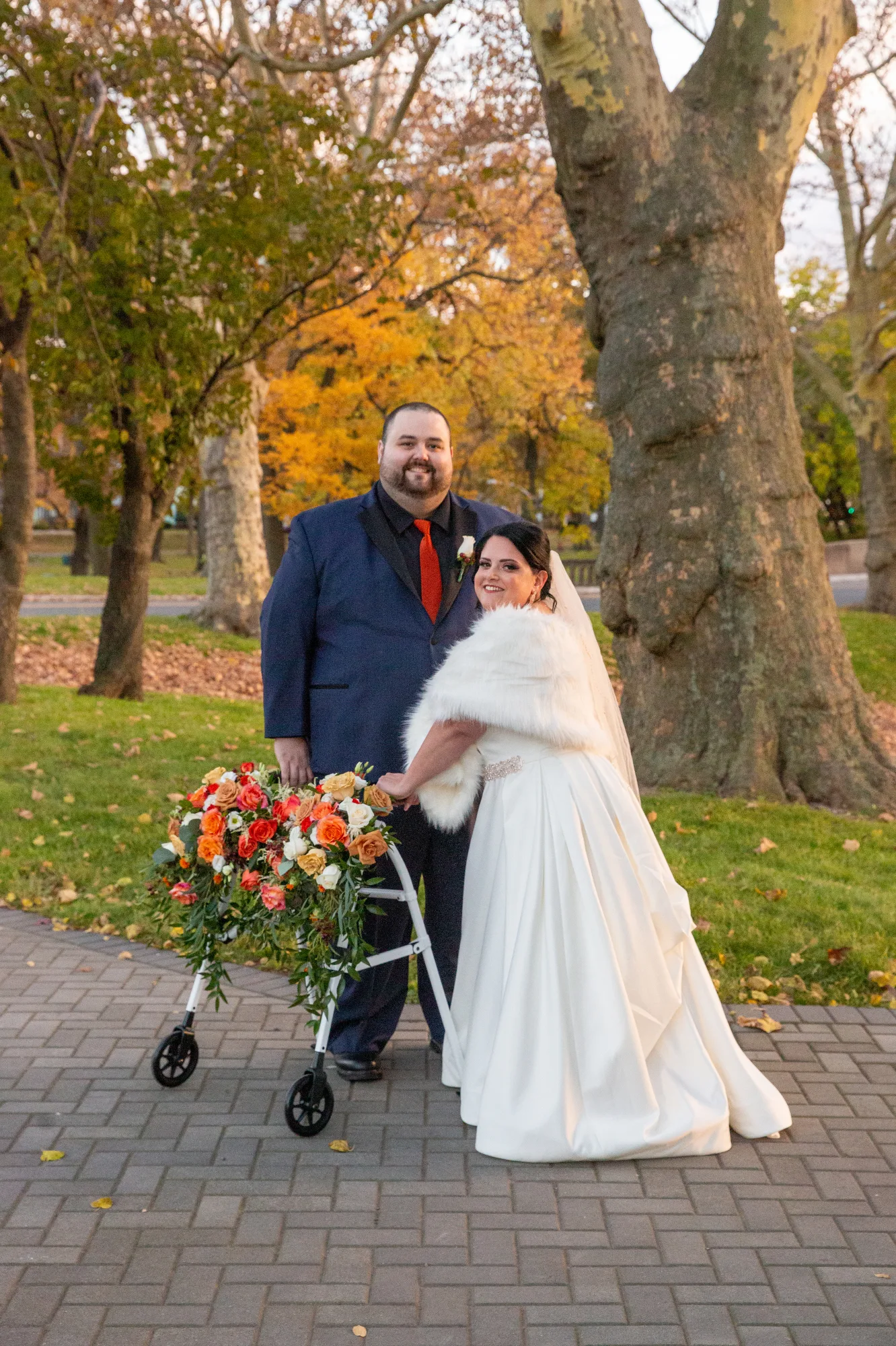
These days it’s best to picture the actual sentence a couple would type, then write your bio like it’s the answer. For example, the question “Does this photographer have experience shooting disabled people?” could be answered in your bio by saying something like:
I’ve photographed weddings where the couple used wheelchairs, walkers, service animals, and ASL interpreters. I plan every shot list around actual mobility and sightlines, not just a pretty backdrop.
That mention you got back in 2023 is fading fast
AI models weigh freshness heavily, especially for anything time-sensitive (which most wedding searches are). A well-reported piece from two years ago can lose out to a mediocre one from last month, purely because the mediocre one is newer. Yes, this is mildly infuriating but it’s also just how the system is currently built.
Practically, this means a single big feature you got years ago isn’t the flex it used to be if nothing’s happened since. Staying visible now takes more of a drumbeat than a spotlight.
Even if you’re skeptical of AI, it’s good to stay literate on this stuff
I understand why so many of us these days are skeptical about using AI in our small businesses. Here’s the deal though: None of this requires YOU to touch an AI tool, generate a single word of copy with a chatbot, or change one thing about how you run your business day to day.
Understanding how couples are finding vendors is not the same thing as adopting the technology yourself, and conflating the two is how a lot of otherwise smart vendors end up accidentally invisible. You can hand-write every sentence of your bio in your own voice and still benefit from knowing that specificity and third-party mentions now outperform keyword stuffing. Being AI-literate is closer to understanding how the mail system works than it is to writing letters with a robot.
What to do this month
Ok, so you get the idea here: many couples are using AI to find their vendors, and they’re not clicking through to your website or social links. What now? Here are some practical tips, none of which requires a budget.
- Update listings and bios that haven’t moved in a year or more.
- Say yes when another vendor offers a shoutout or a swap, and offer one back.
- Look at your bio and ask whether it answers a real question a couple might ask out loud, or just lists your service area four different ways.
- Getting mentioned on a site with actual editorial trust, one that couples already read and that AI models already cite, does double duty now. Sure it’s referral traffic the old-fashioned way, but it’s also the kind of third-party association that your own website genuinely cannot produce on its own. Offbeat Wed vendor members can submit their real weddings for publication consideration from their vendor dashboard.
Which brings us to one more actual, concrete way to do that this month: we’re pulling together a piece on navigating blended families and adult children at midlife weddings, and we want our vendor voices in it. We’re talking to officiants, planners, photographers, caterers, and others who’ve got a real story from the field. Offbeat Wed vendor members: be watching your email for a submission call!
(And if you’re not in here yet, let’s change that.)