


For a lot of women, their first experience with a structural shaping garment other than a bra is a corset-back wedding dress — and they quickly learn that a corset is a bit more complicated to wear than a bra. (What, you mean I have to reach in and shift stuff around to get it sitting right?)
Corsets have been around in various forms for hundreds of years. Although body shaping garments have existed as far back as ancient Minoa, the first true corset was invented in the first half of the 16th century when whalebone, horn, and/or reeds were sewn into bodices to give them a rigid shape — giving women’s torsos the typically “tubular” silhouette of the Tudors and Elizabethans. By the 19th century, the ideal silhouette was that of an hourglass, and corsets stiffened with steel provided the rigid shapes we know in typical Victorian and Edwardian fashion.
When you compress the average torso in a corset, the person’s back skin tends to fold a bit on itself. This is commonly referred to as “back cleavage” or the “Venus Fold.” For some people, it is a natural and normal part of wearing a corset (particularly if they are tightlacing, as it illustrates just how much reduction the person has managed to achieve). Other people don’t like how it looks. This is one of those “to each their own” situations.
Corsets were traditionally intended to be a foundation garment — worn over top of an undershirt or chemise, and underneath a bodice, gown, or blouse. The garment under the corset helped keep body oils off of the expensive (and difficult to wash) corset, and both the under and outer garment helped disguise any lumpiness caused by the corset’s constriction.
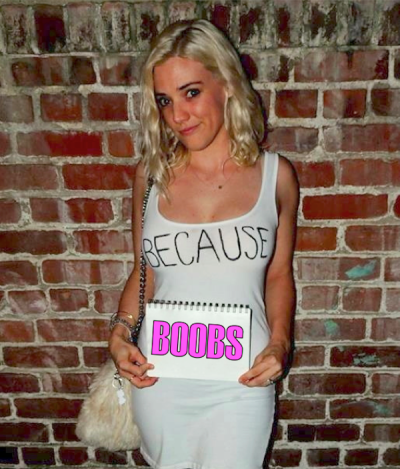
If you want to avoid the Venus Fold, it is a matter of careful fitting… and letting your seamstress or alterationist know to make sure there’s not too much compression at the top of the bodice back whilst maintaining enough support at the front. A well-fitted corset should provide waist reduction in the middle, but a smooth line on the hips, and a smooth line up the back when you’re standing still.
If you want to minimize your Venus Fold, here are a couple methods you can try:
- Tie the corset more loosely at the top so it’s not compressing you and your skin so much
- If you don’t want to have your corset looser, have the person who is lacing you in push your skin apart to distribute it more evenly under the lacing
Thing is, if you’re going for any kind of reduction, a fold in your back just goes with the territory. You can work with it, but ultimately you gotta learn to love it. Even Dita von Teese, whose corsets are custom-made to fit her like a glove, has some back folding and bumpiness when moving around in a corset:










15 responses to “Why do I have cleavage on my back? Learning to love your Venus Fold”
I’m adjusting to my Venus Fold since I have recently started waist training along with crossfit. Weird combo, but it’s definitely working :). I HAVE A WAIST NOW!
Anyway, this post is fabulous and explains why the Venus Fold exists perfectly. I just referred to it as “back boobies” for a while. This is much prettier.
I didn’t know it was called a venus fold. I love it!
Venus fold is such a sensual name for it. Much better than the terribly-named modesty panel (ugh) that is used to cover it up.
It’s interesting to me that the term “modesty panel” bothers you – it doesn’t speak to the fit of a corset at all, it merely covers the portion of the back that would be exposed underneath the lacing. Kind of like the tongue of a shoe, or a zipper facing. 🙂
I know. It just sounds so… archaic? Victorian? I prefer my skin not to seep through the laces as much as the next person, but to imply that showing it is immodest seems so last century to me.
Perhaps a better term would be a “comfort panel”? Laces pressing against my bare skin can be remarkably UNcomfortable, so having that panel helps. Or even just a “lacing panel”.
Love it. Though “corset tongue” is pretty entertaining too.
Thank you so much for posting this! I just had a corset-back put into my wedding dress and I was feeling all depressed when I saw the fold back there. Never knew that it was supposed to look like that–and a name like Venus Fold is just freakin awesome.
I would much rather “suffer” from having a Venus Fold whilst being en corset than wear an undergarment that doesn’t properly support my breasts.
Also, Dita von Teese just happens to be one of my fashion idols. If she can exhibit a Venus Fold without any shame, why can’t I?
The costume she’s wearing in that pic was made by burlesque star and amazing costumer Catherine D’Lish. It has over 100,000 swarovski rhinestones in six shades of orange/peach on it. *drool*
That’s a relief, I thought it was just my back being chubby.
Thanks so much for this! I’ve been feeling a bit insecure about my “back crack” as I like to call it and I’m feeling a hell of a lot better about it after reading this post.
now i can be confident in my venus fold. although my wedding dress appears to be too small now..
Adding a modesty panel works.
It’s pretty much impossible to get rid of. It’s a corset, your skin and fat has to go somewhere, it doesn’t magically disappear! Even with the best waist training or tightlacing corsets, there will be one. I’ve heard that a higher back on the corset can help a little, but it won’t go away completely.
I will not wear a corset at my wedding, since I waist train, I know what a proper corset is, so almost no wedding dress would be good enough, haha.