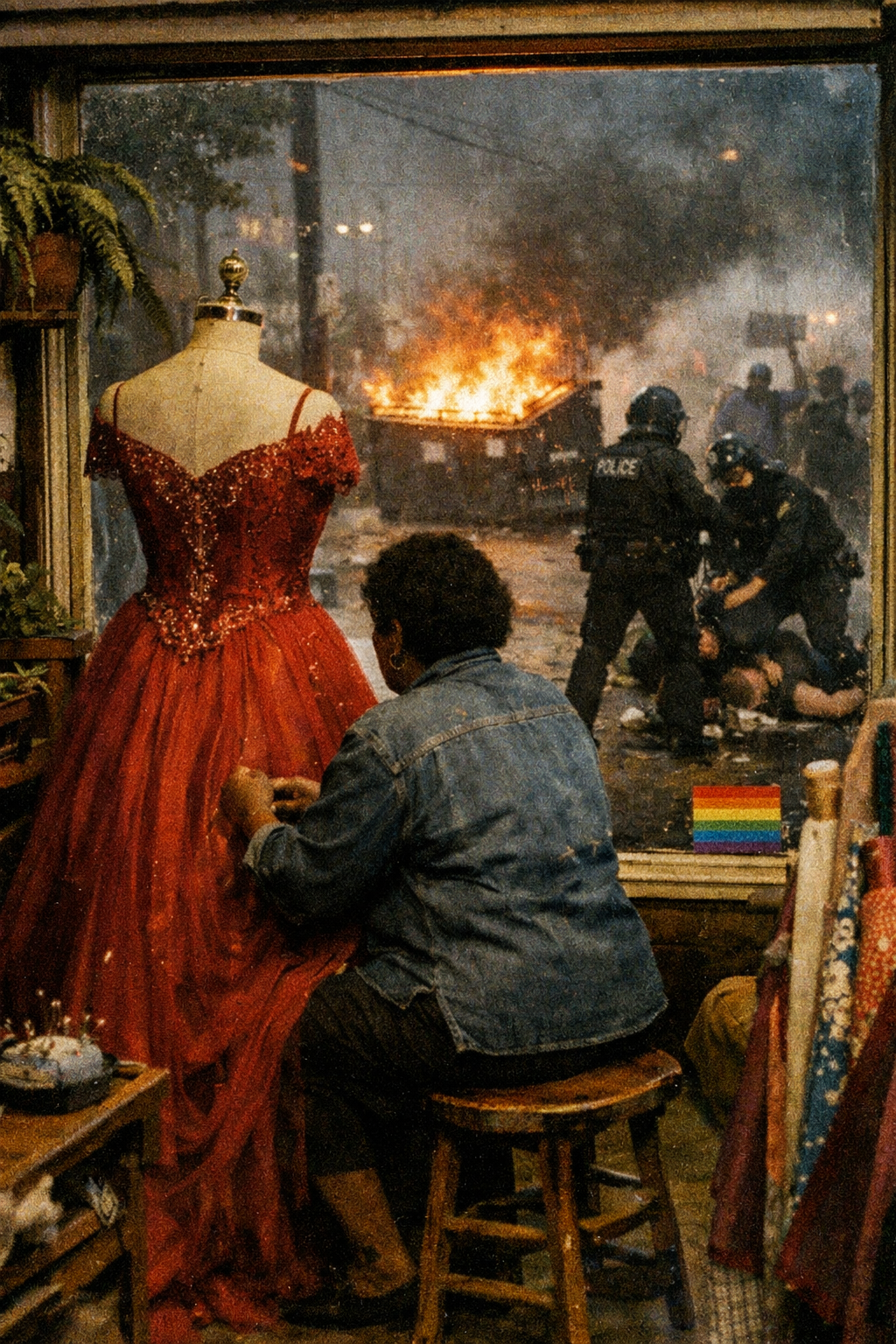


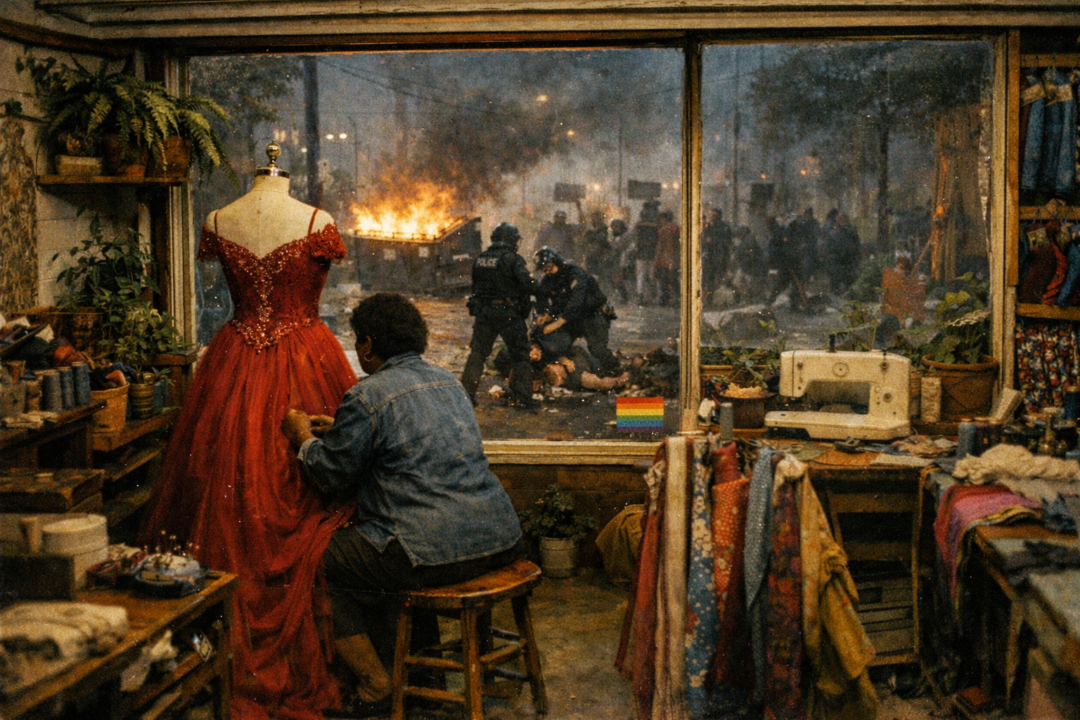
If you’ve felt like the world is one big dumpster fire lately, you’re not alone. I think all of us small business owners and creatives are wrestling with burnout, dread, and even a sense of moral fatigue as one crisis after another piles on.
This morning I read an article in The Guardian about the mental health of dealing with a polycrisis… and OOF, it hit me in the feels. A polycrisis is when multiple large-scale crises (political, economic, environmental, technological, and social) are all happening at once and compounding each other, creating a constant sense that everything is unstable.
The article quoted Dr. Steve Himmelstein, a psychologist from New York: “People are feeling overwhelmed and overstimulated, bombarded with bad news each day,” he said, noting that many clients have “lost the future” and are struggling to imagine better days ahead.
It’s hard to plan your next product launch or editing elopement photos when global instability, climate disasters, political chaos, and AI upheaval all have you wondering if the future is canceled.
As Himmelstein said in The Guardian: “there’s a lot of despair” going around.
Offbeat entrepreneurs (looking at you, neurodivergent, LGBTQ+, and counterculture vendors!) often feel this disconnect acutely. Many of us pour our hearts into businesses that reflect our values and identity… and watching the wider world burn can hit like an existential gut punch.
There’s the classic stress of running a small biz (hi, financial precarity and hustle culture burnout!), now turbocharged by permacrisis background noise!? WTF.
I saw a survey of small biz founders that found that 72% of entrepreneurs struggle with mental health issues, yet 81% hide those struggles behind a “I’m fine, everything’s fine” veneer. The pressure to have it all together, especially for marginalized or creative business owners trying to legitimize their work, can be intense.
Bottling it up only furthers the isolation, so today let’s get it all out.
Tragic optimism and tactical delusion: how to work when the world’s a trash tornado
So how the hell do we keep working (let alone creating new projects or planning fabulous weddings for wonderful people) when it feels like the world might collapse by next Tuesday?
Psychologists and therapists suggest it’s time for some “tragic optimism” and mental reframing. I’m not talking about toxic positivity or pretending everything’s peachy… it’s more about accepting reality while still clinging to meaning and hope.
In that Guardian article, Dr. Himmelstein (who trained under Holocaust survivor Viktor Frankl) reminds us that believing in a brighter tomorrow can literally be life-saving. Frankl called it the “meaning of life” even in suffering: a refusal to give up on the future.
That might look like imagining your business a year from now in a better world. (“Daydreaming about their lives one or two years out in a more perfect world… The future is their homework,” as Himmelstein says of his clients.)
This mental shift is hard, but crucial. When uncertainty is shoved in our faces, we stop dreaming ahead. Despair shrinks our imagination. So we’ve got to gently drag our focus back to what’s still in reach: our values and the weird, beautiful things we do every damn day.
Maybe you can’t predict next year’s economy or whether the grid will collapse (cool cool cool, love that for all of us), but you CAN decide that your floristry business will continue centering sustainable, locally-grown blooms, or that your videography will keep amplifying queer joy.
Therapist Kathleen Smith breaks it down like this: there’s a difference between reacting and responding to crisis. Panicked reactions (doom-scrolling, freaking out, or totally avoiding the news) might soothe anxiety in the moment but don’t solve anything.
A more thoughtful response is to define your own values and mission, and take daily actions (however tiny) aligned with them. Smith suggests asking: If politics or the climate (or whatever) is important to you, what’s your plan? It could be as grand as organizing community aid, or as small as making your next client project eco-friendly or inclusive in a way that feels like pushing back at the chaos. The key is to “operationalize” your values in your work. Basically, do stuff that matters to you, even if it’s on a micro-scale.
Smith wrote: “Reacting [means] giving up because your contribution feels too small… Responding [means] trusting that good thinking is contagious if you calmly live out your principles.”
In plainer terms: your one little wedding photo, or cake, or Etsy craft isn’t going to save the polar bears or democracy… but it might save YOU, and inspire those it touches. A whole lot of these tiny actions together is literally how cultural shifts happen.
Ditch the beige bot energy: marketing like a real one in the apocalypse
In these unstable times, many creative entrepreneurs are finding that the old “just stick to business” approach to marketing feels hollow. When the world’s on fire, clients and customers crave realness and shared values, not a phony “everything is perfect!” vibe.
Offbeat vendors have long known that authenticity is an asset, and now it’s essential.
Last year, Amanda (a photographer in our vendor community) shared with me: “In today’s world, it’s extra important to be who you are and stand for your beliefs, even if that turns away other people.”
In Amanda’s case, that means she’s not shy about dropping an F-bomb in her client comms or being open about her politics and morals: “My couples don’t give a shit if I swear a little, and they sure as hell don’t want to support a business who doesn’t align with their beliefs/morality,” she said.

In other words, your ideal customers actually want you to be a REAL HUMAN who shares their values, not a beige corporate robot. Being upfront about what you stand for (immigrant rights, gender inclusivity, anti-racism, disability access, climate-conscious practices, etc, etc, ) can help the right people find you and trust you.
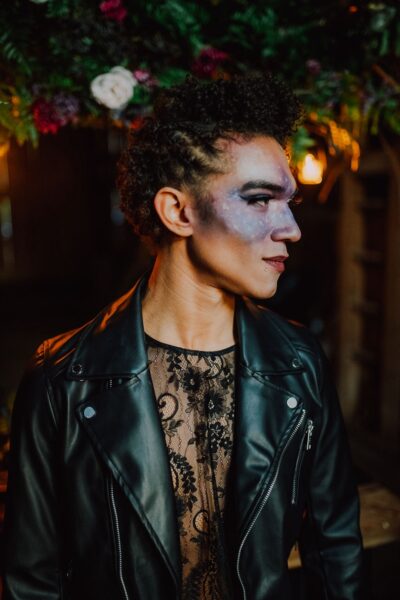
More and more businesses are waking up: people want real-deal substance, instead of gross-feeling spin. I remember reading an article a few years back about how crisis moments (like the 2020 quarantine, remember that?) are “the perfect time to reaffirm your brand values and put them to work.” In other words, the values that you built your business on shouldn’t disappear when things get rough. You can use them to guide your communications and show everyone where you stand.
Maybe that means a florist highlighting their eco-friendly practices more openly, or a wedding planner posting resources for engaged immigrant couples, or simply being candid in newsletters about how grateful you are for community support through tough weeks.
Sharing your values in concrete ways helps clients feel seen and reassures them that you’re in tune with what’s going on.
Empathy is the new algorithm: showing up without selling out
Equally important is showing some freaking empathy. People are exhausted and anxious, so a bit of compassion in your marketing goes a long way.
During crisis peaks, some businesses have shifted to providing free helpful content or virtual services to stay connected with their community rather than pushing sales. The message is, “We’re all in this together, and I’m here to help,” not “buy my stuff or else.”
For example, a baker might host an online cupcake decorating hour just for fun and solidarity, or an officiant might offer a discount to immigrant couples.
These gestures acknowledge reality (we’re struggling, let’s support each other) while keeping your brand relevant and valued. It’s not about profiteering off pain… it’s about being human and useful, which builds loyalty that outlasts the crisis.
One trap to avoid: performative positivity. Social media can tempt us to present a shiny, unbothered facade, especially when some algorithms reward glossy consistency. But forcing your business to look 100% A-OK when you’re personally falling apart is not sustainable (and frankly, most of us can smell that inauthenticity through the screen!).
In practice, this might mean being honest if you need to take a week off from posting, or not responding to emails at 2am. Many creative pros are setting healthier boundaries and telling clients upfront: e.g. “Studio closed on Fridays for sanity hours” or “slower email responses during wildfire season.” Far from being turned off, the right clients will respect you more for modeling self-care in a chaotic world because it gives them permission to be human too.
P is for purpose (and panic, and pizza, and pushing through anyway)
And let’s not forget the big “P” word: purpose. Remember your why. Why did you become a wedding photographer, or start a queer-owned bakery, or launch a jewelry studio? Odds are it wasn’t just for money (LOL, you would’ve chosen a more stable path if so).
There was passion and purpose at the core… maybe creating beauty, serving your community, uplifting underrepresented stories, or simply finding personal freedom.
In times of crisis, that purpose can feel obscured (“does wedding decor matter during civilizational collapse?!”) but purpose is exactly what we need to hang onto.
Apparently even McKinsey has research saying folks who find meaning in their work bounce back from stress faster. (Duh, but also: receipts.) Your work DOES matter… even if it’s niche or quirky or not saving lives. Maybe especially because it’s niche and quirky: it brings color and hope and creativity to the world.
(And you know what fascists hate? COLOR AND HOPE AND CREATIVE THINKING!! Also, dancing and vegan cupcakes.)
A burning world needs more beauty. An era of hate requires even more expressions of love and joy. For those of us in the wedding industry, beauty, joy, and love are the mediums we work in… KEEP GOING!
So, my beloved Offbeat entrepreneurs, keep that weird light burning (even as the world burns around us). Prioritize your mental health like it’s part of the job (because it is!!). Adapt your workflow and marketing to honor what’s really going on with you and your clients. Find solace in your people and the purpose that underpins your work.
The polycrisis is real, and it’s not letting up anytime soon… but neither are we. In the midst of chaos, we can each still be here: still creating and still connecting. Still believing that love is love, and joy matters. Still creating gatherings where communities gather, celebrate, and support. That’s a victory in itself!
Want to talk this through with an actual human?
If these questions about burnout, values-based work, or marketing in a polycrisis are hitting close to home, this is exactly the kind of thing I work through in my 1:1 consulting conversations. Every Offbeat Wed vendor membership includes a private consulting session with me, and I also do consulting with folks outside the wedding industry who are running thoughtful, values-aligned orgs in messy times. Sometimes it helps to stop yelling into the void and actually talk it out.






2 responses to “Business, burnout, and the big ol’ blazing hellscape: how creatives can survive a polycrisis”
YESSSS! Big fat yes to all of this! And thank you for saying what I needed to hear ?
GWORL, I think so many of us are wrestling with this issue. It’s hard to know how to keep going when our work feels like it’s non-essential (and maybe even kinda silly?). But creatively supporting community celebrations brings joy & love to the world and FUCK WE NEED MORE OF THAT!!!