

We’re continuing to honor World Autism Month with this post from California wedding planner and Offbeat Wed community member, Kaitlin Howell from Conjured Events.
Before getting into the wedding industry, I worked for over four years at a day program catering to adults with developmental disabilities. In addition to the art and wellness programs, I planned events for the day program attendees.
Now that I’m a wedding planner, I’ve learned that not every client explicitly discloses a diagnosis… however, I’ve worked with several couples, staff, and vendors who all identify as being on the spectrum. These experiences have shaped the way I plan weddings and events. Here are some of the most valuable lessons I’ve learned.
The first rule of a neurodivergent wedding accessibility playbook is that there is no playbook
Accessibility starts at the beginning of planning for everyone, regardless of where they might land on the spectrum. I start with an open conversation outlining clear expectations and figuring out communication needs. I never assume how someone processes information, and I don’t expect them to fit into my ideal planning mold. I ask a lot of questions and listen to find out exactly what works best for them.
Everyone is different, and I like to ask my couples questions to help me understand how their heads work, such as:
- Are they visual learners?
- Do they prefer examples over descriptions?
- Does their brain go blank looking at a detailed spreadsheet, or can they immediately plug in? Do colors help? (I try to make everything rainbow!)
Based on those needs, I can remove information from my templates, fill in things for them, color code, adjust fonts and formatting, add images, or switch apps. Everything is built to support how the specific couple thinks and processes information.
Specificity and structure can go a long way
I’m currently working with a couple who identified as autistic, and I asked for direct feedback on the planning process. They shared that with other vendors, they often felt confused: unsure what was included, what certain terms meant, or what to expect next.
In contrast, they said our process has felt clear because everything is broken down in a way that makes sense and leaves little room for ambiguity. As wedding pros, we all have our own ways of presenting what we do, but I’ve definitely seen that folks on the spectrum often appreciate step-by-step clarity.
Banishing the evil silverware
A few other specific examples of accommodations I’ve made, from previous and current weddings include:
- Changing names of things that just don’t fit: One partner was not vibing with the term bridal room, and to be honest, we don’t love the wording either. Now, thanks to them, we adapt and ask each client what they want to call the room where they’ll be preparing. Their names have included green room, green suite, secret lair… just to name a few!
- Thinking about textures and things that give The Ick: While discussing rental items, we were told not to select any evil silverware. Rather than dismissing or glossing over that, I recognized it could be a sensory or textural concern and asked follow-up questions until I fully understood what they meant. (Evil to them was overly heavy, oddly shaped, weird designs. They just want to hold a standard weighted and simple utensil!) Understanding this allowed me to make choices that genuinely supported their comfort, rather than guessing or overlooking something important.
- ADA accessibility in style: We don’t live in a society that respects accessibility enough. I’m always trying find ways to make events more accessible, asking myself: how can we make sure everyone can make it, and do it in style? Not only does the couple need to be able to comfortably attend their wedding, but so do their favorite people. Wheelchair accessibility is huge, but so is recognizing spaces where guests can go for quiet time.
Normalizing the Step Away
Scheduling quiet moments in a designated safe place is probably my number one priority. I do this for my staff and vendors as well. It is SO important to have somewhere to take a break that feels safe (you will often find me there, if and when I can sneak away!).
It’s hugely helpful to preemptively identify high-stimulating moments and make it normal and expected for the couple to step away. I check in often just to be available in case anyone needs a break, and I add in buffer times between major moments at each event. We love quiet time and snacks after the ceremony and cocktail hour!
Why would these ideas just be for folks on the spectrum?
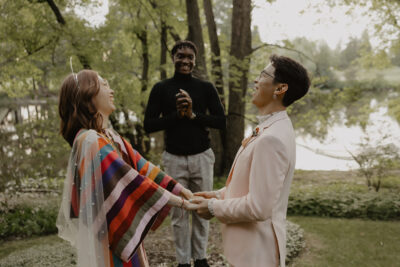
Because many folks are either undiagnosed or don’t feel the need to share, I think it’s important to approach every event with a level of flexibility, autonomy, and accessibility built in from the start, rather than treating it as something that only happens upon request.
In other words, my neurodivergent wedding accessibility playbook is actually that ALL nearlyweds deserve mindful attention to how they process information, and support for finding quiet and safety during what’s inevitably going to be an exciting day.