


Our self-catered wedding weekend had a lot of moving parts. We had four self-catered meals: Welcome dinner, reception dinner, the next day brunch, and an evening picnic.
I used electronic planning tools to make sure we kept stress to a minimum. I had a very detailed spreadsheet shared among all helpers with Dropbox. I imported the Offbeat Bride checklist into my Google calendar, which syncs among all my devices and to my husband’s calendar. Pinterest and Evernote collected ideas for me and my helpers. But let’s get more detailed!
Here are few things we found really helpful to organize the massive planning effort for our self-catered wedding weekend…
1. Have a brainstorming meeting
Allow everybody’s ideas to be heard. We wrote down EVERY idea. Then, at a second planning meeting, it was easy to say “This idea will work. But this idea will require more time than we have.”
2. Spend some time thinking about the specifics of your event and location:
- What is your vision? What are your priorities for the weekend? How will the wedding fit into the larger picture?
- What information will your guests need to best take advantage of the area?
- Are there any special accessibility or dietary needs?
- How will transportation and accommodation be handled? Are there realistic options for all of your guests?
- What do your facilities offer in terms of: kitchen equipment, dishes, pots and pans, serving equipment, towels and washcloths, etc.? Think about what you use every day while cooking and cleaning, and make sure you will have access to it.
- How large are refrigerators, ovens, dishwashers?
- Where are bathrooms? Are there enough?
- If you have to bring supplies for the whole weekend, is there space for storing them?
- Will you need to rent extra tables and chairs?
- Is there easy access to things like groceries, basic supplies, etc?
3. Accept help
I was hesitant to actively ask for help, but any time it was offered, I accepted it. Sometimes it meant that things were perhaps not exactly like I would have done it, but that’s okay — our event was a community event.
4. Identify a core planning team
Call them whatever you want to call them, but just make sure you have people who are onboard with your vision and your needs.
5. Open a Dropbox folder
Share your Dropbox folder with your core team, and keep the spreadsheet (and anything else you need to work on collaboratively) there.
6. Choose food that can be cooked a few weeks in advance, frozen, and heated easily
Think of foods with complex flavors that actually taste better over time (Indian and Mexican flavors, for example). Note that appetizers/tapas tend to be fussy and require lots of on-site prep — a meal with entrees and sides is often much easier to prepare.
7. While menu planning, think beyond food
Plan serving dishes, serving utensils, prep crews, and clean up crews. Remember that even for the meals you aren’t catering, you may need to provide for your helpers.
8. Clearly identify a day-of coordinator
Find somebody who is bossy, organized, and nice about it.
9. Don’t try to plan your guests’ time for the whole weekend
You can’t! Instead, specifically indicate to your guests in advance what periods of time they will be on their own, and give them the resources they need to figure out how to have fun. Balance the together time with time for folks to wander off in smaller groups or alone. And give yourself some alone time, too.
10. Set good expectations (or low expectations )
COMMUNICATE CLEARLY to your guests what they need to bring, what they won’t have.
11. Use your website wisely well in advance
And remind guests a few times to check there for information. Include a weekend schedule and area resources on your website.
Finally, this is the spreadsheet we used to organize the massive planning effort for our self-catered wedding weekend. Feel free to download it, and get started on your own self-catered event!










5 responses to “Tips and tools for planning your self-catered wedding weekend”
Thank you for these tips! Although we won’t be doing an entire weekend, our wedding may end up being self-catered or semi-self-catered, and these tips are helpful for any wedding on the self-catering spectrum. I love the idea of having a planning meeting – I think that will really help!
Lots of very good points. Well written post! I would echo the points about all the little things you don’t think of. I know of one wedding where they only had one pair of oven gloves so serving all the hot dishes of food took forever!
Also, the storage and transporting is really important, particularly if people helping with catering are also going to the ceremony etc. We were helping at a family wedding and there weren’t enough fridges at the venue so we had to leave things in the fridges at the house until the last minute. We then had to take things from the house to the reception via the ceremony so had to wrap several cheesecakes in sleeping bags and then pack big bottles of frozen water around them in the boot of the car to create a temporary freezer. It was a boiling hot day so we also had to leave the ceremony pretty quickly afterwards to get everything to the reception venue and into the cool.
Oops, somehow didn’t see this post went up! Great point – transportation is really important to think about.
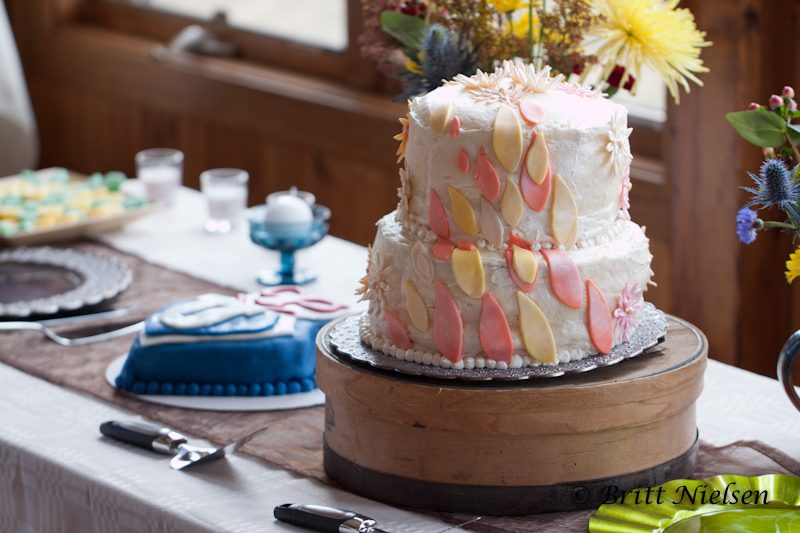
Your comment about the hot day reminded me – be careful where you put your cake- the hot afternoon sun coming in that window started to melt ours 😉
I’ve been thinking about self catering and this is a big help! Thanks for posting!
This post is a god send for me. We are looking at a venue that allows us to rent for three whole days. Thank you, thank you, thank you!