


Offbeat Wed Vendor Memberships include a 1:1 consulting call with the founder of Offbeat Wed — that’s me, Ariel. I’ve done dozens of these calls this year, and there’s a through-line across every session: my vendor members are highly skilled, brilliant small biz folks whose value is real but sometimes a little untranslated.
Almost none of them needed their business “fixed”… they needed it made more discoverable, both to the humans who refer them work, and to the AI systems increasingly doing the same job. As I tell my members constantly: in the weird world of how the web works this year, your visibility online depends on your legibility.
I want to share some specific, anonymized examples of what actually happens on these consulting calls. You may recognize your own business challenges in a few of them…
Offbeat Wed vendor struggles, and what I do about it
Pain point 1: “My marketing used to work, and now it doesn’t. I don’t know what changed.”
This is the most common opener. A vendor built their business when couples found vendors through directories, blogs, and Google, and their old playbook quietly stopped producing. They’re still doing everything “right” by 2016 rules, which is exactly the problem.
How I address it:
This is where my particular eye earns its keep. Twenty years of editorial work means I can spot the sentence on your website that’s costing you trust, the phrase every competitor also uses, and the old award badge that’s aged from a cute credential into a cringey liability. 20 years inside the wedding industry means I know what couples are afraid of when they’re vendor shopping, and over 20 years of running my own small business means I know first hand the challenges of supporting your family with your small business. I review every surface where your business appears before we ever talk, then hand you specific, prescriptive fixes rather than vibes.
Real life exampleS
When I say specific fixes, I mean specific. In recent sessions I’ve told vendors things like:
- You describe yourself as “budget-minded” while describing luxury-level involvement. That label is attracting price shoppers and repelling the clients who’d pay for what you actually deliver.
- Your listing still offers photos on an “edited disk” delivered via Facebook. To a Gen Z couple, that doesn’t read as charmingly old-school… it reads as “does this person even know what cloud storage is?”
- You’re linking out to a Google Drive file for your testimonial instead of embedding it. That’s a trust leak at the exact moment a couple is deciding whether to inquire.
- In 2026, the 2019 award badge on your site, communicates “I haven’t won anything since.” Remove it.
Every vendor leaves our call with two things: a concrete list of next steps they can actually execute, and the unfamiliar experience of having someone see their business clearly and say so out loud. Think of it as a big sister who dorks out on your brand messaging, tells you the truth about your website, and means every compliment because she can cite her sources.
Pain point 2: “AI is changing the game, and I don’t understand it. (Also, I might hate it.)”
Most vendors are operating on SEO advice from 2016 and Instagram assumptions from before the pandemic. Meanwhile, their prospective clients are talking to ChatGPT and Claude about their weddings, looking for vendor recommendations. Some of my vendor clients love AI, some refuse to touch it on principle… as a wedding vendor, regardless of whether you’re choosing to use AI for your business, you must understand how potential clients are using it.
How I address it:
I separate AI discoverability from AI endorsement. YOU don’t have to use AI, but your business needs to be findable by the tools your clients are using, which includes AI. I teach vendors that LLMs train on trusted, high-authority sites like Offbeat Wed, which means a well-written directory listing literally puts words in the bots’ mouths: the specific language you use in your online listings is the language AI reproduces when describing you. The practical work is FAQ-style content, entity clarity, plain-language identifiers in headers, and consistent naming across every surface.
A few examples:
- A nerdy wedding planning team is ethically opposed to using AI, which I told them is a valid position that changes nothing about the fact that their couples may be asking AI “who can help me with my Star Wars wedding?” We talked about using an FAQ to exactly those questions so the bots could quote them (all with no AI use required on their side).
- An alternative photographer in the UK had been running their copy through AI for a year, and I did the opposite work: flagged the AI-smoothed phrasing that had sanded the specificity out of their voice, and taught them the tells so their sharpest, earned lines could do the positioning.
Pain point 3: “I’m having trouble standing out.”
“Authentic.” “Candid.” “Capturing moments that matter.” I call this wallpaper language: phrases this common do zero filtering, and they force potential clients to do interpretive labor most of them won’t bother with.
How I address it:
Specificity surgery! I audit vendors’ websites and listings and flag any sentence that could appear unchanged on a competitor’s site. Then we replace vague or emotional claims with observable behavior: how you start with a client, and what you do when things get confusing. I also push vendors to name their clients’ actual fears out loud, because no one is thinking “I hope my photographer is authentic.” They’re thinking “I don’t want to feel awkward on my wedding day,” or “I’m worried my wedding will feel like a staged photoshoot.” The vendor who names the uncomfortable thing directly can win the booking.
example:
- A photographer in New England kept promising clients would “feel seen,” but never explained what she does differently to make that happen. We converted her vague feelings-language into the specifics of how she shows up on weddings days, and what she does to validate her clients in the moment.

Pain point 4: “I’ve lost the plot… I’m on a hamster wheel and can’t see the forest for the trees.”
Post-COVID ruts, post-hiatus rebuilds, businesses running on autopilot for a decade. So many of my vendors are solopreneurs who work incredibly hard, get lost in their own tasks, and lose track of what’s working. (How do I know? Because I too am a solopreneur who spends so much time working in my closet office that I lose track of my own big-picture issues!)
How I address it:
I bring outside eyes and actual numbers, since vendors working alone tend to misread a hard season as a larger failure. I separate what’s truly broken from what just feels bad, then hand over a contained, prioritized list of next steps. When the problem is structural (no systems in place, out of date copy that hasn’t been touched in years), I say so directly…. and then I provide the fixes.
A FEW exampleS:
- An officiant in the Pacific Northwest rebuilding after a long hiatus described herself as spinning her wheels; her actual bookings had gone from two to five to four-already-on-the-books, which I showed her was a 250% increase in baseline activity. The real gap was that she was prioritizing performance (bridal shows) over infrastructure, so we defined what CEO work concretely looks like for her business.
- A southern photographer who’d been a member for over a decade said they “never recovered after COVID.” The audit found their surfaces still offered edited disks and linked to vendor platforms that went offline in 2015, signaling an unmaintained business without them realizing it. We built a modernization list, and I flagged the “endlessly available” language in their copy that was setting them up to attract clients who expect over-functioning. (Boundaries are a marketing asset!)
The patterns underneath all of my Offbeat Wed vendor consulting calls
Every one of these vendors arrived believing something was wrong with them or their work. Across my 1:1 sessions, the actual diagnosis was almost always a translation gap: real value expressed in language that neither humans nor machines could confidently understand or repeat.
What I offer on these calls is an outside editorial eye… one that can occasionally see what a vendor can’t see in their own work. I bring the strategic fluency to know how discovery is working right now, plus the specific words to help my clients close the gaps (often copy-pasta ready, always theirs to take or leave!).
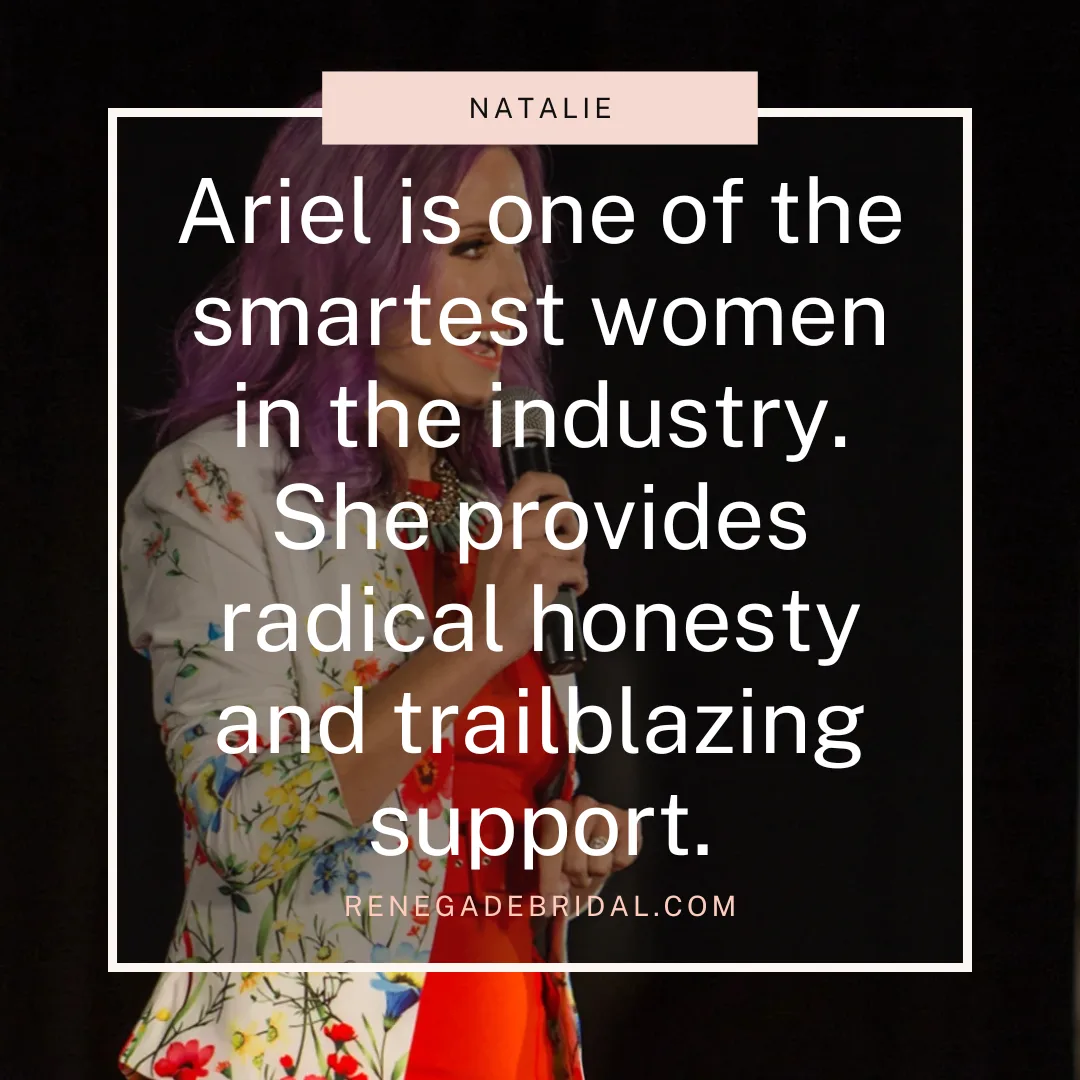
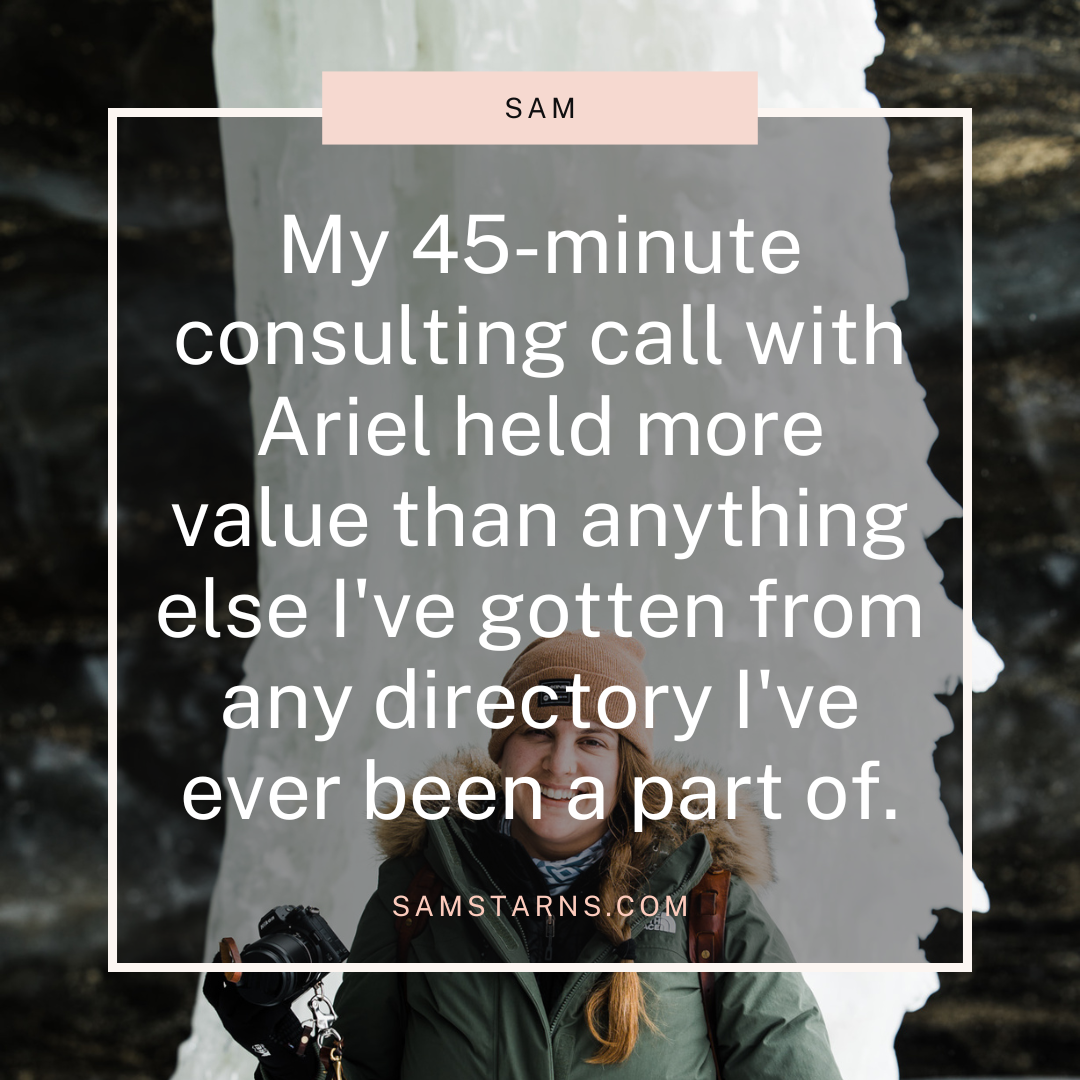
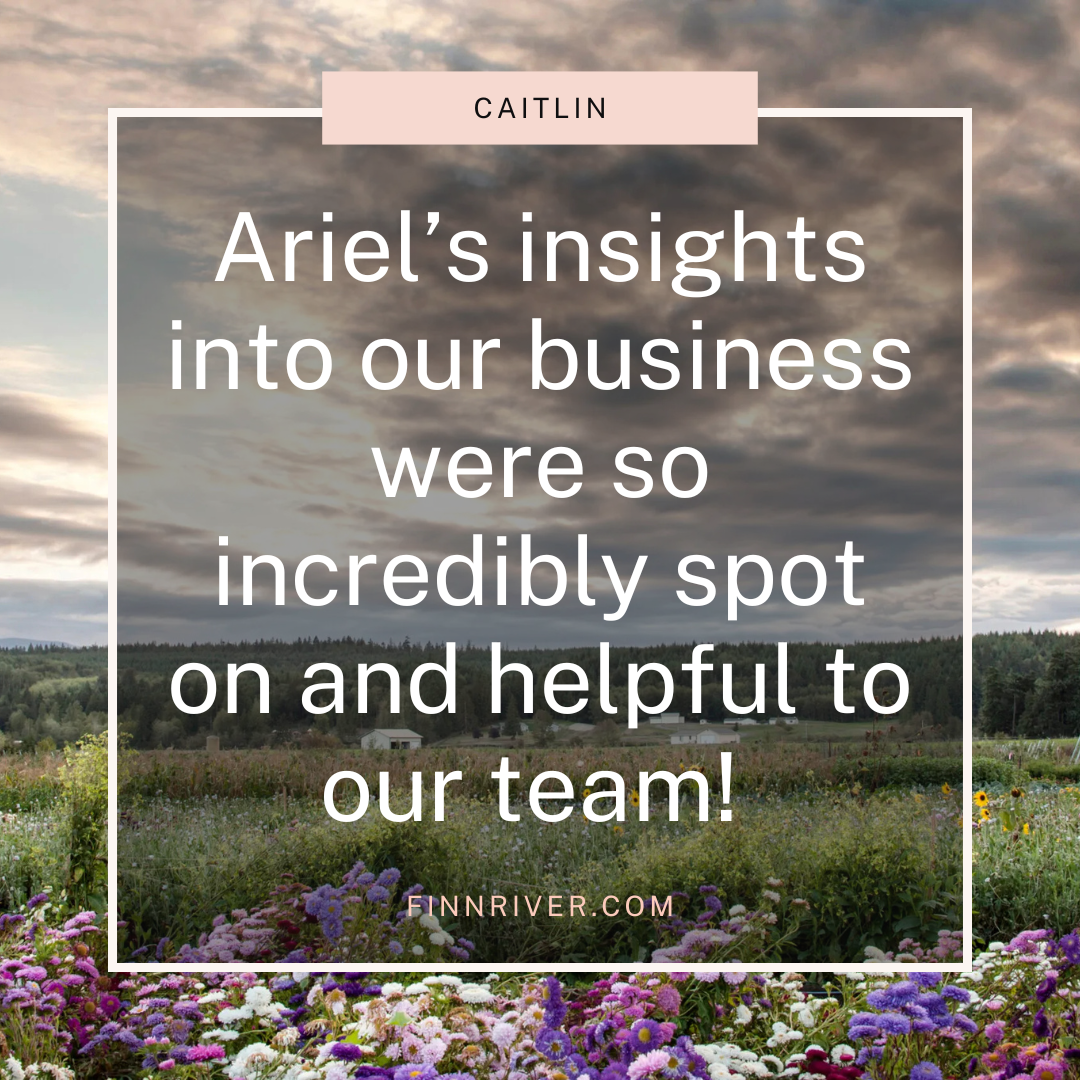
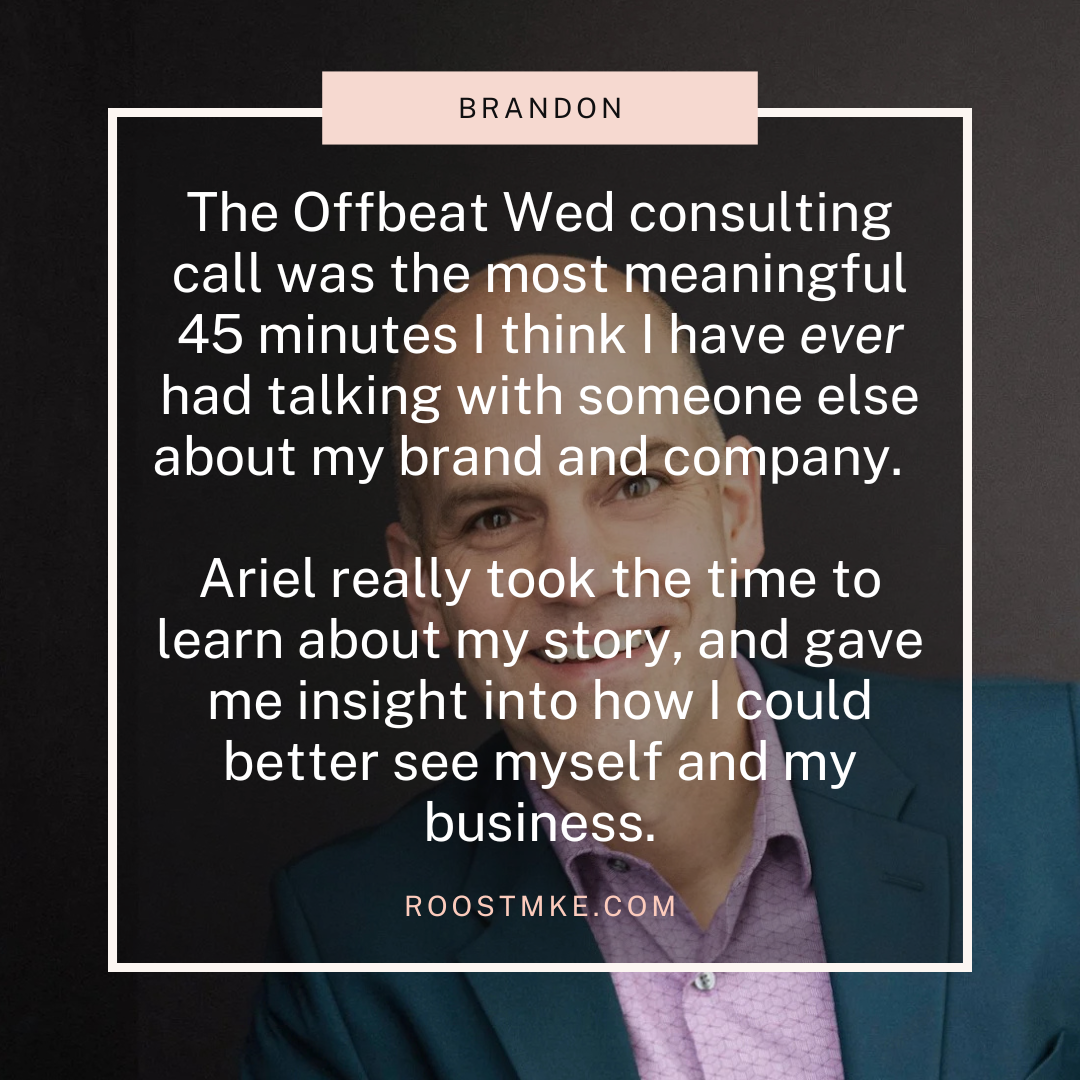
Vendor members walk away from these calls with a document, and sometimes, the first accurate mirror their business has been shown in years. If you want to know how they feel about the calls, I’ll let my vendor members speak for themselves…
If you’d like to sit down 1:1 and talk over the pain points of YOUR business, then let’s get you in here.