


In my region in Canada, stag and doe parties (also known as buck and doe party or Jack and Jill party) are pretty common. For those not in the know, these parties are a fundraiser for engaged couples.
What is a buck and doe party?
Let’s start with the basics of a buck and doe party: you invite attendees who pay an admission (usually around $10-$15), and then they play games like dollar dances, coin toss games, raffles, with all the proceeds going to the couple getting married to help them pay for the upcoming wedding.
Of note: Stag and doe parties are not the same as plain ol’ stag parties, which are essentially bachelor parties.
Is a stag and doe a Canadian thing?
Yes, but even there some folks find the idea strange.
Don’t get me wrong: I understand why some people may be weirded out by this idea, as popular as it might be in small towns across Ontario. Weddings can be expensive for guests — you have the shower gift, wedding gift, gas, possible hotel/airfare accommodations, and bachelor/bachelorette parties, just to name a few expenses. So I don’t blame anyone for thinking, “Well, I’m already spending X amount of dollars on this wedding, so why should I spend more?”
But I like to think about it this way: it usually costs me more money to have a night out at the bar, or have dinner and a movie, than it does to pay a $10-$15 admission, and to spend a few bucks on games at a stag and doe. Plus, that money is going to help someone I care about.
I can honestly say that when I got married four years ago, my stag and doe saved my wedding. Since stag and doe parties are a tradition on my husband’s side of the family, I had a few people mention the idea to me and offer to set everything up for it. I was hesitant at first, even though I had attended one before and had an amazing time. But then we got hit with a financial disaster.
How a stag and doe party saved my wedding
Three months before my wedding, I was eating dinner one night, and got this massive amount of pain on the right side of my mouth. It turned out that I needed emergency dental surgery. I didn’t have insurance, and the surgery cost $2,000 — just over half of what was left after the deposits and expenses we had already paid for our wedding. So we figured we had three options: postpone the wedding and lose a lot of what we already spent, borrow the money, or take our friends up on their party offer.
We ended up making about $1,000 off of the stag and doe, and even those who we thought might be offended by the idea all left raving about how much fun they had. Plus it allowed for both sides of the family to get to know each other better. Between that $1,000 and what we put aside from each paycheck afterwards, we were just able to make it work.
I’m helping out with another family stag and doe party coming up. When I took to the internet to come up with some games, I found that the majority of the comments in every article echoed the same cry: don’t expect other people to pay for your wedding, or find more ways to cut costs.
Like I said, I understand that weddings can be costly for guests, and I am all for cutting wedding costs however you can. However, after my experience, I feel like allowing your community to support your wedding by giving them an inexpensive night of fun isn’t such a bad option — especially when you consider the fact that most other fun outings will end up costing more than the typical stag and doe.
Besides, who among us can honestly say that we’ve never been in a position where we have needed help with something in our lives?






26 responses to “In defense of STAG AND DOE parties: How a buck and doe party saved my wedding”
I’m totally in support of doing whatever works for you for your own wedding, and having people pitch in $ for an event is not a whole lot different than those folks who have pot-luck weddings or get friends to volunteer their time in order to make certain things happen that would usually require paying a vendor.
That said – the ONLY stag & doe parties I have ever been invited to have been for weddings I have NOT been invited to. And I have definitely not appreciated that. I’ve always found it so strange that people I barely keep in touch with ask me to help cover the cost of their wedding when they don’t consider me close enough to include in the celebration of the marriage.
What are other peoples’ experiences? Is it pretty standard to invite people to your stag & doe even if you aren’t inviting them to your wedding?
In part, in small towns especially, it’s a way of having everyone you know/everyone in town out for a night of fun to celebrate with you, even if you can’t invite them all to the wedding.
I’m not from a small town. Stag and Does are weird to me. But some places, they’re expected, and EVERYONE turns up. In the town where my partner’s family is from, it’s the main form of summer entertainment. Everyone goes, invited or not. In fact, I don’t think people even bother to invite the townies; they know they’ll come regardless.
I do not like stag and does and I refuse to go to any of them that I am invited to. I am not interested in funding a friend’s/stranger’s/family’s wedding. If you can’t afford it, don’t do it. Just because you want something, doesn’t mean you have to do it.
If money is an issue, work with what you have instead of going outside of your means. This is a major problem in our society and why so many people are crippled by debt. I already have to spend money on travel, wardrobe and gifts for weddings and other related events… now I’m supposed to fund the wedding as well? It’s just too much.
There are lots of things I wanted for my wedding but couldn’t do because it just wasn’t affordable. I don’t understand why that’s such a difficult concept to work with.
I See where you’re coming from, but I think with these parties, it’s not the couple that is doing the inviting. Their friends/family probably aren’t privy to the invite list. I would’t be offended if that was the case.
Also, I could understand not being invited if it was in public venue (like renting out a bar) and was open to everyone as long as they paid to come in. It would be cheaper than an unsponsored night out.
Where I am from people aren’t “invited” to stag & does. Most of the time there is a announcement in the newspaper and people in the wedding party post on FB that they are selling tickets. People make the choice to come to these parties when they know they are not invited to the wedding. And as Dee said the couple isn’t throwing the party for themselves, it’s usually the wedding party.
I’m the writer of the article, and believe me, I do see where you’re coming from. We tried right from the start to keep the wedding under $5000. We had more than that in the account but the cost of the surgery hurt our wedding fund big time, and with less than three months to go until the big day, it was too late to get back all of our deposits, so we would have lost all that money. Even though I was initially hesitant about it, S&Ds are very popular in our area anyways, to the point where it’s almost expected that you’ll have one, and we figured that it was a better option than losing all our money or having to borrow from someone (or the bank). I definitely believe that you should have a wedding you can afford, but sometimes crazy things happen. Plus if it’s considered the norm where you live and your family and friends like going to them, then it’s really not that huge of a deal.
This post is really spot-on! Stag and Does (or whatever name you use; there are many) are very regional. If you are in a community where they are common and people want to throw you one, and you’re comfortable with that, go for it! It’s not really considered classy to throw yourself a Stag and Doe, or demand that your bridal party do so and besides, you’ve got to have a group of people who are excited about the event to make it work.
The community element is so important. Where I come from, a lot of people cook and bake stuff to bring, so there’s a nice buffet, and all are eager to buy raffle tickets and whatever other silly thing is offered, just to help out.
However, in the city where I live now, these are almost unheard of and people would likely be confused or even offended if they were invited to one.
It’s really about the people who surround you and what you and they would be comfortable doing.
To me, this is hugely a regional differences thing. Yes, it might be considered strange or offensive in some places but might be the total norm in others.
Which is why whenever someone posts something that seems a little off the wall to me (esp if I’m unfamiliar and particularly if I see they live far away) I try to ask if this is typical where they are from. Yes, they may be doing something strange to people where they are as well, but it could also just be a tradition I’m not familiar with.
And honestly, it’s not just regional differences. For example in my family and our cultural background we believe that it’s incredibly rude to wear black to a wedding. While I know that in some places and traditions it’s becoming more accepted, my family (despite being VERY liberal in nearly all world views) holds onto many traditions when it comes to things like weddings. My grandma would literally kick someone out for wearing black to a wedding.
So point being, I think we all need to remember that some of our own traditions might seem odd to people unfamiliar as well. It’s all about what you’re used to.
I laughed out loud about the wearing black thing- I’m in the same boat! My family was scandalized when one of my best friend dictated us bridesmaids had to wear black dresses at the wedding. I knew she was going for classy, but it did come off funereal.
It’s been said, and I agree, it seems to be a very regional thing. I grew up in and live in Saskatchewan (Canada) but I was born in and most of my family is from Manitoba, which is literally just the next province over. In Manitoba they have socials which sound very similar what you are talking about in this article. Just a fun party that helps raise money for the wedding, and they are totally normal and everyone does them, and they are seen as a fun thing to do.
In Saskatchewan they are unheard of and any time anything like that is even mentioned the reactions are not favorable… and it’s not even like Saskatchewan and Manitoba are all that different, they are both prairie provinces with a lot of agriculture and other common industries (oil, gas, coal in some areas), and like I said – they are right beside each other.
It’s strange, but again, regional differences. My aunt insists that she will throw me a social some day 😉 I will just have to travel 6 hours to go to it, but it’s the thought that counts right?
It must be very regional. I grew up in southwestern Ontario, and buck n’ does were almost mandatory. They weren’t really geared to fundraising for the couple though. The ones around us were held because our communities were so close knit that everyone knew everyone, and most people couldn’t afford to invite their brother’s co-worker’s sister with her husband and three kids) to the wedding, even if she was super nice.
I’ve gone to several, and been a shot-girl at one. The sale of drink tickets usually pays for the venue, the busses that ferry people around, and the redonkulous amount of alcohol that gets consumed, not to mention the DJ and the caterer. There isn’t usually a raffle or anything… it’s just a party.
I think that’s why I never understood why people go so offended by them. It’s just a party! It’s like a pre-reception for all the people who can’t be invited due to size or budget limits (or, yeah, because you don’t really know the person).
Stag & Does are very common around here. When we announced our engagement a whole bunch of people asked if we were having one, so we did one even though we hadn’t intended to.
I LOVE going to them as a guest – they’re a blast, cheaper than a bar night, and there are usually great prizes to be won. I went to one this past weekend, and one the weekend before, and thoroughly enjoyed myself each time.
The only time I recall being annoyed about being asked to attend one was when I was a poor university student, and some older more established friends were getting married. I must’ve been asked 10 times (by their best man) if I’d buy a ticket. It bothered me because asking me to contribute to their fundraiser when I was so low on cash myself was so freakin’ tone-deaf on his part.
Also I generally don’t mind being invited to one even if I’m not invited to the wedding. I think of it as a big drunken engagement party. With prizes. 😀
I just had my stag and doe and it was great! It is highly regional, in my area there is some people who do them but not everyone. My family didn’t traditionally have stag and does, but after mine I think they will start. Everyone had a great time and we ended up making enough money to cover both our centerpieces and our favours. We aren’t having a shower (I hate them) so this was a good way to have people who want to contribute get together and have a great time while supporting us.
When you looked at the cost to a guest, a stag and doe was just slightly more than a shower would be. The food would not have been as good and half of our guests (the male half) would have been excluded. We charged $25 for a catered meal and drinks. We did have raffles and games but there wasn’t a big push for them. When it was all said and done our guests spent less than the amount going out to dinner would have cost them and they got a big party with family and friends.
Where I grew up B&D’s are huge events and they frequently get out of control (to the point that many towns are banning them at town facilities). Many facilities require security to be hired. And most have provisions that the facility staff host the bar (previously one of the major revenue streams was the wedding party hosting the bar). I helped plan my sister’s last year and it was more calm than most – it was a family friendly pig roast hosted by the wedding party. I’m not sure how much was made but we all had a great time.
Where my husband grew up they are much calmer and much smaller affairs. I’ve only been to one (for my BIL/SIL that my husband planned). I was surprised that the tickets were so cheap ($5 in advance, $7 at the door – compared to $10 to $15 back home). There weren’t many people at it so a couple of the games did not make any money. The bride and groom demanded that the wedding party host a B&D and this expectation was only expressed about four months before the wedding(when the guys were asked/told that they were in the wedding party). No one wanted to take charge of the planning – my husband who was best man lived out of town, one groomsman lived out of country, the other groomsman’s wife just had a baby, the MOH was a single mom of two kids who couldn’t be reached since she didn’t have phone or internet, one bridesmaid lived out of town and the other was a teenager. They made some money.
One thing that I noticed from the two experiences was that back home they are community events and everyone comes out (which leads to making more money) but the focus is having a good time. While where my husband grew up they are smaller events and the focus is more on making money. We didn’t have one because we didn’t have a wedding party, plus we didn’t want one after having lived through the planning of my BIL/SIL’s.
I honestly didn’t even know that stag & doe parties were a thing. I live in middle TN. Am I just missing out on all the fun here? Normally all the fundraising events (dollar dances, games) actually happen AT the wedding. Or at least that’s been the case for the ones I’ve gone to.
I think it must be a Canadian thing? I’ve never heard of this either! I’m from the Pac NW and now I want to go to one. They sound fun, but definitely region-specific.
I’m the writer of the article, and I’m in Toronto, Ontario, Canada, and most of my family lives in Newmarket, and they are quite popular there.
I guess in order to be comfortable with one of these parties, I would request to not receive gifts for the wedding. (Close friends and family will most likely give gifts anyway.) To me, this seems like a nice compromise: ” in lieu of gifts, please consider coming to our ______ party.” Guests feel like they’ve contributed to the couple’s day, they’re not out any more money than they would be anyway, and the couple gets to have their day. I have a friend who seemed to throw one event after another for herself for a wedding that all of us were invited to but none of us could attend (it was abroad and in the middle of the week) and I basically decided to not get her a wedding gift because the cost of everything – engagement party decorations, bridal shower brunch at a fancy place, bon voyage party drinks – had gotten ridiculous. I don’t feel bad about it, but it would’ve been nice to have felt as if the other stuff we did was our gift rather than “extra”.
I’m from the American Deep South and have never heard of this ever before, so this entire post was extremely bizarre to me. At first I was really shocked by this concept, but reading through the comments helped me understand a little bit more.
That said, I am 100% certain this would never, ever fly down here. I can’t even imagine the horrified reactions of people in this region at just the thought of being asked to pay money to attend any kind of wedding-related event (though I understand it’s no different than buying a gift, and you actually get something in exchange – I just promise you no one will see it that way!). Which is ridiculous when I really think about it, since practices such as putting $600 espresso machines on your registry and then returning them for the money afterwards are apparently completely acceptable.
I’m always happy to help friends and family where I can, and love supporting those I know. But this, well, I just don’t get it. I try to understand, I really do. But, it seems like if you can’t afford something, you scale it back or simply don’t do it. A wedding can literally be any amount of money you choose, so why not choose something you can actually afford? Isn’t that what we have to do as adults?
I understand wanting a your dream wedding, you can only do it once, but you also have the option to save money for a longer period of time and have your wedding at a later date so you can pay for it. We had a $3000 unexpected expense during wedding planning, it literally ate our ENTIRE budget and even some of our bill money – we had nothing. So we scaled our plans back, and ended up still having a great wedding, without asking anyone to fund it for us.
I truly hope I don’t sound rude, I get that this is regional, and I would attend an event such as this. But even so it will always seem inappropriate to me, especially when you take into consideration the other costs your guests will incur. They may have to take a day off for your wedding, spend money on travel and hotels, potentially buy a new outfit, attend pre-wedding events such as bachelor or bachelorette parties, bridal showers, rehearsal dinners, buying a gift, etc…
So to me, to ask for anything more seems wrong. But then again, this isn’t the norm in my neck of the woods, so maybe it’s just something I’m not used to.
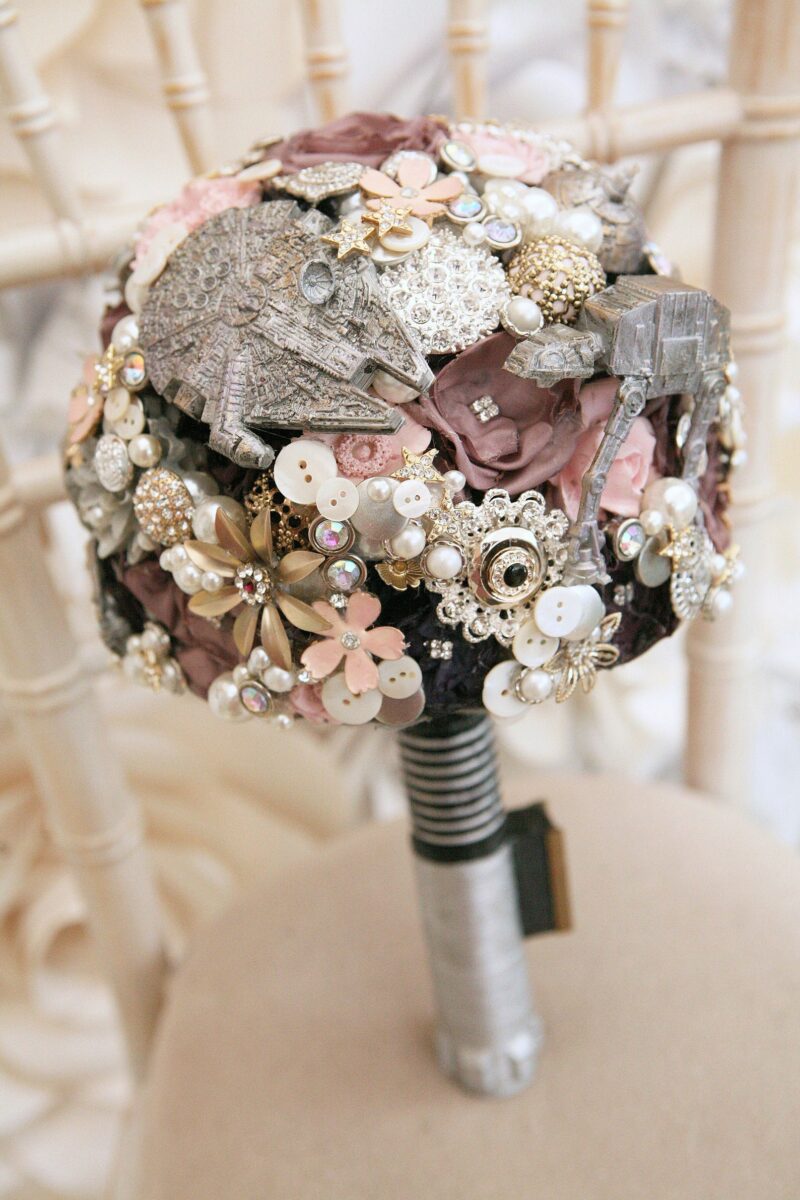
I don’t think you sound rude at all. Like I said, I get that guests already have a lot of expenses, so I certainly don’t fault anyone for not accepting the invitation to the Stag and Doe. In our case, we didn’t really have the option to save for longer since it happened so close to the big day. We had signed contracts and paid deposits too, so for some things (not many, but a few) it was too late to scale back, but we did cut costs wherever we could (ie designing the invitations myself, handmaking bouquets out of things like drumsticks and guitar pics, getting a prom dress in lieu of a wedding dress, etc).
I have attended Stag and Doe parties, so you can add my voice to the “it’s regional” thing. We didn’t have one for my wedding, although I think that’s because we were travelling from out of province (Sackville NB to Ottawa ON). To me, it’s another way for communities to provide support, and to celebrate. And it’s fun!
If it’s not your cup of tea, don’t throw one/don’t attend, but I wouldn’t both getting upset about it. Most of the time it’s the wedding party or family members hosting the S&D, not the couple themselves.
I’m from SoCal and living in Western WA and this is the first time I’ve ever heard of Stag & Doe parties. I’m one of those folks to whom my knee-jerk reaction to the concept is negative. It’s like an IndieGoGo campaign for a stranger. If a friend needed emergency surgery, I’d offer to chip in (money, if I had it, or something else, like dog-sitting or cooking dinner for them during recovery if I didn’t). Using my wedding as an excuse to ask for money from others (even though it’s in exchange for a party, essentially- which I don’t normally charge friends for either) feels more like extortion via guilt. But to be fair, I also hate money dances.
Ugh. I’m in Southern Ontario, and I just got swarmed by friends shocked and horrified about not having a stag and doe because people think they’re a lot of fun (and because we could, and I quote, “make dat cash money”). But the idea of having to go to another party is honestly enough to make me sick with terror. I don’t even like going out to the bar with friends! The idea of being surrounded by a lot of people who will all be in my face and wanting to talk to me and there’ll be a lot of noise and drunk people… please, for the love of god, no.
But like the OP, we’ve had a major set back. My fiance was just laid off. We can’t reschedule, we would lose around $5k in deposits.
I had no idea that stag and does were an almost exclusively Ontario and Manitoba thing until my friends started getting married and having them and I looked it up. I wonder how that came to be?
Anyway, I wouldn’t have one, but I know a lot of people do in these parts. I do think it’s inappropriate to invite people who you’re not inviting to your wedding. I find it kind of weird how Americans get really freaked out about being asked to spend money at a wedding, like there’s a lot of articles about how cash bars are totally taboo too but lots of people do that here.
I honestly hate the idea of Stag and Doe. My friend keeps on nagging me and says that she is saving me tickets (which were original $10 each) but now they are $20 each. She said she will give me and my boyfriend 2 for 30$ but I think it is a rip off considering I was told they were originally $10. The only thing included in the cover is the admission to the stag and doe. You have to pay extra for games, drinks, and raffle. There isn’t any food included either because they are trying to keep the party as cheap as possible. Honestly, I have never spent that much money at a club before- so paying $15 for just entering the hall is too pricey for me. I don’t even know the people hosting the stag and doe! The bride doesn’t even like me (which I do not know how that is possible since I don’t even know her. I met her once and she ignored me the whole time) and yet she still wants me to fund her wedding??? Going out on the town is cheaper (entry is usually free or 5-10$ cover) then going to the stag and doe. I am forced to go because my friend tricked me asking me what I was doing on March 1st, and I said I was free (assuming we would do something) and then she said she would save my boyfriend and I stag and doe tickets, and I “can’t get out of it since I have nothing better to do”… Why the hell am I stuck paying $30 for someone who doesn’t care for my company and have absolutely nothing included in the huge price? I am going to get drunk before I go and have dinner at home so I’m not starving all night. Plus, I am protesting the games, prizes and drinks because I will not be paying $5 for one drink, $5 for a few raffle tickets and $5 for 1 game. I am not rich like they think I am. Not that you did this to your friends! I just know I will never, ever go to another one again. Even if someone tries tricking me into it. Not worth the price at all for someone who I do not know. Maybe for a friend who actually enjoys my company and isn’t using me for my money.